Denting and Painting in Noida | Professional Car Body Repair | Auto Meisters
AUTO MEISTERS

Denting and Painting in Noida

When your car deserves proper restoration, accurate paint matching and finish quality that lasts.

When Your Car Deserves More Than a Patch Job

At some point, almost every car owner in Noida faces the same frustrating reality. A parking lot collision, a stone chip that has grown into a rust spot, a bumper that caught the edge of a pillar, or a deeper scratch that has gone through the paint and reached bare metal. The damage is there. The real question is what happens next.

At many roadside workshops, the answer is quick and cheap. Filler, a fast coat of paint, some polish, and the car is handed back the same day. It may look acceptable at first glance, but that usually changes with time. Paint begins to crack, the colour mismatch becomes easier to notice, and the repaired panel starts drawing more attention than the original damage itself.

At Auto Meisters in Sector 116, Noida, denting and painting is approached as proper restoration work—not cosmetic patch repair.

The focus is not simply hiding damage from a distance. The focus is restoring the panel correctly, matching surrounding paint accurately, and delivering a finish that still looks right months and years later—not just on delivery day.

This page explains what professional denting and painting actually involves, how it differs from typical body shop work, and what you should know before choosing where to repair your car.

What Professional Denting and Painting Actually Involves

Professional denting and painting service

The terminology makes it sound simpler than it is. Denting refers to the structural reshaping of a damaged panel. Painting refers to the application of colour coat and clear coat to restore the panel's surface appearance. In professional practice, both of these involve multiple stages, precise technique, and careful judgment at each step.

A dent is not simply pushed back into place. Depending on the type and depth of damage, the panel may need to be worked from behind using body hammers and dollies, pulled using specialised dent-pulling equipment, heated to increase metal flexibility, or in some cases filled and shaped where the metal cannot be fully restored to its original geometry.

The goal at this stage is to restore the panel as close as possible to its original shape before any filler or paint work begins.

If this step is rushed and excessive filler is used instead of proper dent repair, the surface may look smooth initially but often develops cracks, unevenness, or sinking over time.

Scratches are assessed based on depth before any repair decision is made. A surface-level scratch that has not broken through the clear coat into the colour coat can often be addressed through polishing as part of our car detailing process .

A scratch that has reached the colour coat, penetrated to primer, or exposed bare metal is a body repair job.

Treatment of each depth requires different preparation and a different repair approach.

Why Paint Matching Is More Complicated Than It Looks

Paint matching is where many local workshops struggle the most, and it is one of the easiest ways to spot a poor quality repair.

Paint matching is one of the biggest differences between a proper repair and a visibly repaired car. While every vehicle comes with a factory paint code, achieving a true colour match is more complicated than simply mixing paint by code alone.

Factory Code Is Only the Starting Point

Paint changes slightly over time because of sunlight, weather exposure, age, and polishing history.

Metallic, pearl and multi layer colours are especially difficult because even small differences in shade or flake pattern become noticeable under sunlight.

That is why paint matching needs more than simply reading the code and mixing colour.

Manufacturer-Sourced Paint

At Auto Meisters, we source paint directly from the manufacturer instead of relying only on generic aftermarket mixing systems.

This gives us a much closer starting point to the original factory finish, especially for difficult colours like pearl white, metallic silver and premium luxury shades.

Blending for a Natural Finish

Paint blending technique is equally important.

Instead of leaving a visible transition line between old and new paint, the colour is carefully blended into the surrounding panels so the repair looks natural and consistent under normal lighting conditions.

Accurate Surface Assessment

For cars with heavy dust buildup, oxidation or surface contamination, our professional car wash and decontamination before the colour matching assessment can give a more accurate read of the existing paint condition.

Quality Paint Work Requires the Right Environment

Car surface preparation before painting

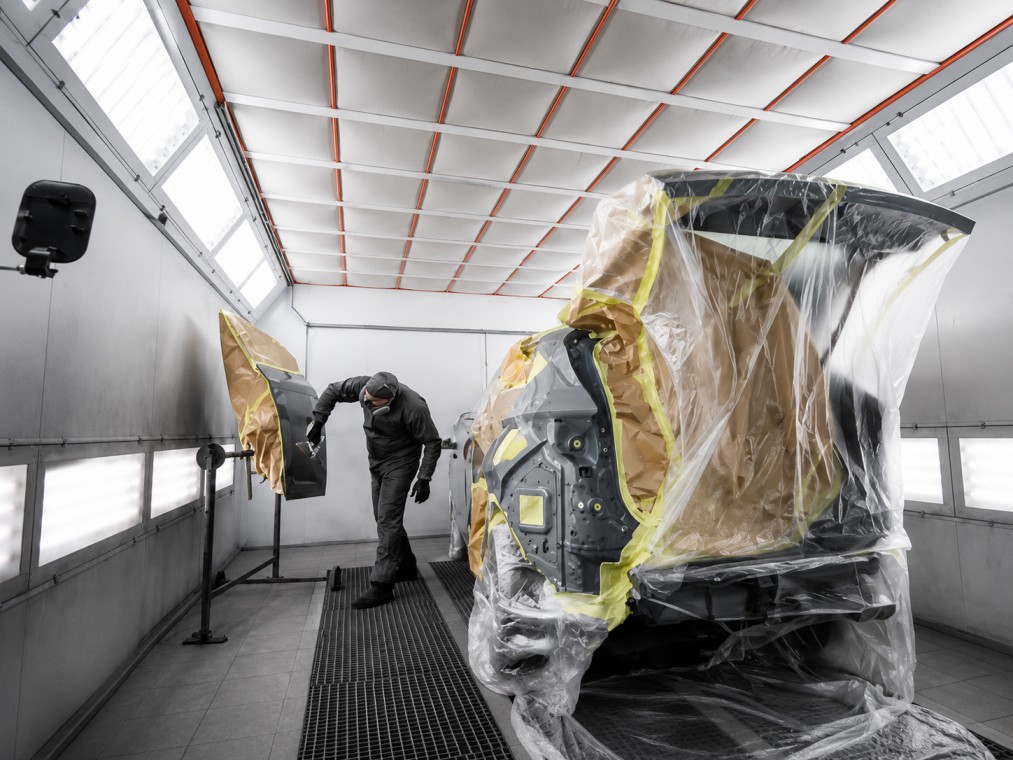
And that’s why we have a dedicated paint booth. An automotive paint booth is a purpose-built, sealed environment designed to control every variable that affects paint application and curing quality.

The paint booth environment is carefully controlled during the painting process. The air is filtered, temperature and humidity are managed, and continuous airflow helps prevent dust from settling onto the paint while it is still wet.

The curing process is also controlled with heat to help the paint bond properly and harden evenly before the car leaves the booth.

This matters because paint is applied as a liquid and cures into a solid over time. Every particle of dust, every temperature fluctuation, every humidity variation during the application or curing window becomes part of the final finish.

Dust that lands on a wet clear coat produces a textured, grainy surface that is visible and has to be wet sanded and re-cleared to address properly.

Paint applied in cold conditions may not flow out evenly, leaving texture on the surface. Paint applied in high humidity can trap moisture in the film, leading to cloudiness or adhesion issues over time.

Painting cars outdoors, in an open workshop bay, or in an environment without proper air filtration is a compromise that shows up in the quality of the result. The shine may look acceptable immediately after application but it has a short life.

The long-term durability, the clarity, and the consistency of the surface are what separate a paint booth result from a workshop-floor result.

Our indoor professional workshop at Sector 116 uses dedicated paint booth systems for all refinishing work. Cars do not leave the controlled environment until the paint is properly cured and ready.

Surface Preparation: Where Most of the Outcome Is Decided

If you had to identify the single stage of automotive refinishing that has the most impact on the final result, it would be surface preparation.Paint is a thin, transparent system that amplifies what is underneath it.A surface that is properly shaped, sanded to a fine finish, and correctly primed, produces a paint surface with depth and smoothness.

A surface that was rushed through preparation produces a finish that looks ordinary even with a technically good paint application on top.

Our process starts with proper dent repair before any filler or paint work begins. The panel is restored as close as possible to its original shape so only minimal filler is needed, reducing the risk of cracking or unevenness later.

The repaired area is then carefully sanded and prepared in multiple stages to create a smooth surface for primer and paint application.Primer helps create an even base, while guide coat checks help identify any remaining imperfections before painting begins.

This preparation stage takes time, but it is one of the biggest reasons professionally repaired panels continue to look good years later instead of developing visible repair marks within a few months.

What Types of Damage We Repair

Minor dents and door dings

Parking lots in Noida's markets and malls are a reliable source of minor door-edge dents.

Where the dent has not creased the metal or damaged the paint surface, in that case, paintless dent repair techniques are applicable.

But if the paint is broken or the metal has creased, conventional repair with paint refinishing is required.

Deep dents and structural deformation

More significant impact damage that has deformed the panel shape requires proper metal work before surface finishing begins.

This includes dents from parking pillars, low-speed collision damage, and hail impact on boot lids and roofs.

Scratches at various depths

Some scratches are limited to the clear coat and can be removed through polishing, while deeper scratches may cut into the paint or even expose bare metal.

The correct repair approach depends on how deep the damage goes, which is why proper assessment matters before deciding between polishing, touch up work, or repainting.

Bumper damage

It needs a different repair approach compared to metal panels.

Plastic bumpers crack, bend, and flex differently, so the repair materials and paint process must be designed specifically for flexible surfaces.

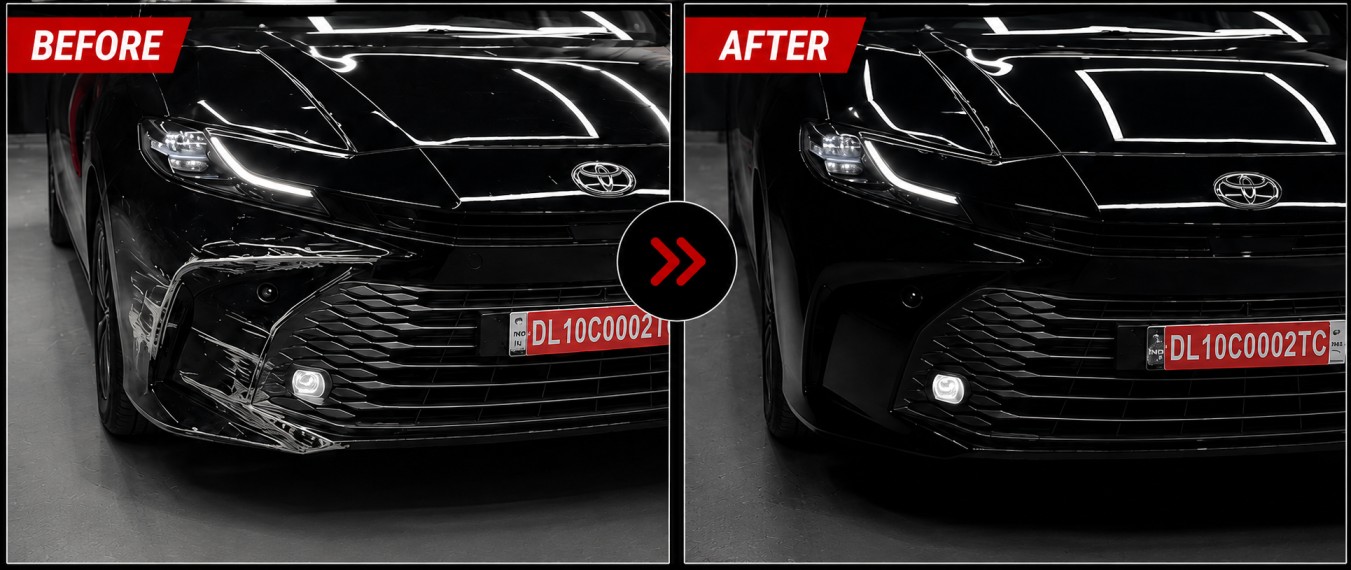
Using the correct repair techniques and flexible primer systems helps ensure the repaired bumper remains durable and does not crack or peel during normal use.

Accidental damage repair

We handle everything from single panel accident damage to larger multi panel collision repairs involving bumpers, fenders, doors, bonnets, and surrounding body panels.

The first step is always assessing whether the damage is cosmetic, structural, or a combination of both before planning the repair process.
If the repaired panel will later receive PPF , the denting and painting work is completed first and the paint is given proper curing time before film installation.
Applying PPF too early over freshly painted panels can affect both the paint finish and film adhesion.

Full Panel Repaint V/s Touch-Up: Making the Right Call

Not every paint repair job requires a full panel refinish, and not every damage situation can be adequately addressed with a localised touch-up. Making the right call between these two approaches requires honest assessment of the damage extent and a clear understanding of what each approach can and cannot achieve.

Localised Touch-Up

Localised touch-up work is appropriate for small, well-defined damage areas where the surrounding paint is in good condition and the affected area is small enough to be addressed without the colour boundary being visible.

This is common for minor stone chip clusters on the bonnet leading edge or small scratches on lower bodywork.

Full Panel Refinishing

Full panel refinishing is the right approach when the damage covers a significant portion of a panel. Or when the existing paint condition is too uneven for a small spot repair to blend properly, or when the dent repair area is large enough that repainting the entire panel gives a cleaner and more consistent finish.

It is also the preferred approach for difficult colours where matching a small repaired section perfectly with the surrounding aged paint would be visibly inconsistent.

We assess each vehicle's specific situation and explain the reasoning behind our recommendation before any work begins.

Full Car Repaint and Colour Change Projects

A complete car repaint is very different from a normal panel repair job. It is a much larger process that involves extensive preparation, careful paint application, and controlled working conditions to achieve a consistent finish across the entire vehicle.

Full car repaints are usually done for three main reasons:

Restoring paint that has become heavily faded, oxidised, cracked, or damaged over time

Changing the vehicle’s colour as a personalisation choice

Restoring a project or older vehicle back to its original colour and finish

In all cases, the final result depends heavily on the quality of the preparation work and the environment in which the paint is applied.


The existing paint surface is properly prepared across all panels before repainting begins

Any rust, corrosion, or damaged areas are repaired before paint application

Primer, colour coat, and clear coat are applied in the correct sequence with proper curing time between layers

A controlled paint booth environment helps maintain consistent colour and finish quality across the entire car

For colour change projects, door jambs, rubber seals, trim areas, and panel edges are also refinished so the old colour is not visible anywhere in the car


After a full repaint, protecting the fresh paint with ceramic coating makes practical sense. The repainted surface is at its most receptive state, and a coating applied at this stage protects the new finish from UV exposure, chemical contamination, hard water and construction environment that Noida's daily conditions deliver.

For owners who want maximum long-term protection on a freshly painted car, a graphene coating offers a step up in durability, heat dissipation, and anti-static performance that keeps the new paint looking its best for longer.

The Repair Process at Auto Meisters

Understanding what actually happens during a repair helps set realistic expectations and explains why the timeline is what it is.

1. Damage Assessment

Damage assessment. The car is inspected under proper lighting with documentation of all affected areas. For insurance-related repairs, a detailed assessment report is prepared.

2. Disassembly Where Required

Disassembly where required. Bumpers, trim pieces, and adjacent components are removed where necessary to assess the full extent of damage and ensure all repair work is accessible.

3. Dent Repair and Metal Work

Dent repair and metal work. Panel shaping is completed before any surface filling begins.

4. Surface Preparation

Surface preparation. Feathering, sanding through grades, filler where required, primer application, and guide coat sanding to confirm surface readiness.

5. Paint Mixing and Matching

Paint mixing and matching. Colour is sourced directly from the manufacturer and mixed to the specific code. The match is verified before application begins.

6. Paint Booth Application

Paint booth application. Colour coat applied in correct layers with appropriate flash times. Clear coat application. Initial curing under controlled conditions.

7. Final Finishing

Final finishing. Any wet sanding and polishing required to achieve full clarity in the clear coat. Reassembly of all removed components.

8. Quality Inspection and Delivery

Quality inspection and delivery. Full inspection under studio lighting before the car is released.

How Long Does Denting and Painting Take?

Turnaround time at Auto Meisters ranges from 2 days to approximately 1 week, depending on the scope of work involved.

A single panel denting and painting job is usually completed within 2 to 3 days. This includes the dent repair process, surface preparation, paint application, and the curing time needed before the car is ready for delivery.

Larger repairs involving multiple panels, full body repaints, or colour change projects naturally take longer, often closer to a week depending on the scope of work. Proper preparation, controlled paint application, and sufficient curing time are essential for achieving a finish that lasts rather than one that simply looks good temporarily.

Rushing the curing stages produces a result that may look complete but is not stable, “And paint that has not fully hardened is more vulnerable to scratches, marks, and surface damage in the first few days after delivery.

We give you a specific estimate after the intake assessment. The timeline reflects what the job actually requires, not what is most convenient for the schedule.

What Happens After the Repair: Protecting the New Paint

Fresh automotive paint continues to cure even after it leaves the paint booth, and the first 30 days are especially important for how the finish settles and hardens.

During this period, avoid automatic car washes, waxing, polishing, and any harsh contact with the repaired panels.

Routine car wash using pH neutral products and soft microfiber materials is the safest approach until the paint fully cures.

If the repaired panel previously had ceramic coating, graphene coating, or PPF, the paint must be allowed to cure properly before any protection is reapplied.

PPF specifically, a minimum curing period of 30 days is generally recommended before transparent film protection is applied over the fresh paint.

For interior work that may have been affected during a repair process, or for vehicles that have been in a workshop for an extended period and need a cabin refresh, a deep interior dry cleaning session is worth scheduling alongside or after the body repair work.

Why Noida Car Owners Come to Auto Meisters for Body Repair

Factory-Sourced Paint with Accurate Colour Matching

Factory-sourced paint, not mixed approximations. We source paint directly from the car manufacturer for colour code accuracy. This gives us the most accurate starting point available for matching the original factory colour, particularly for complex colours and vehicles where paint batch variation is a known factor.

A Professional Paint Booth for Every Job

A professional paint booth environment for every job. Every repainted panel goes through our paint booth system. The controlled conditions are not a luxury for high-end vehicles only. They are the standard for any job we take on.

Preparation That Is Never Compressed

Preparation that is not compressed to meet a lower price. The preparation stages are where the quality of a paint job is determined. We do not offer a compressed version of the process at a lower price point. The work is done correctly or it is not offered at that price.

Honest Scope Assessment Before Work Begins

Honest scope assessment before work begins. If the damage is beyond what a normal denting and painting repair can properly fix, we will tell you clearly before starting the job.

If the damage can be properly restored through localized touch-ups instead of full panel replacement, then that’s exactly what we would recommend.

A Full-Service Restoration Approach

A full-service restoration approach. After denting and painting work is completed, many owners choose to restore the rest of the exterior as well so the repaired panels blend naturally with the overall finish of the vehicle.

Our car detailing and paint correction services address the wider exterior condition, and coating options allow the protection level to be restored across the whole car, not just the repaired area.

Accessible from across Noida. Our workshop is at BR-85, Sector 116, Noida, reachable from Sector 115, Sector 117, Greater Noida West, and via the Noida Expressway. Clients come to us from Indirapuram, Vaishali, Crossing Republik, and sectors across Greater Noida.

Why Local Roadside Repairs Often Cost More in the Long Run

Many low cost roadside denting and painting jobs look affordable initially because important parts of the repair process are rushed or skipped entirely. Common shortcuts include poor surface preparation, low quality paint matching, uncontrolled open air painting environments, and insufficient paint curing time before delivery.

The problems usually appear later. Colour mismatch becomes more noticeable over time, clear coat starts peeling or cracking near the repaired area, and the finish ages differently from the surrounding factory paint.

In many cases, the panel eventually needs to be repaired again.

A properly repaired panel takes more time because preparation, paint quality, and curing all matter.

While the upfront cost may be higher, it is usually far less expensive than paying for the same repair twice.

Frequently Asked Questions About Denting and Painting

Can a scratch be repaired without repainting the full panel?

Mostly Yes…, but it depends on how deep the scratch is and where it is located on the panel. Light surface scratches can often be removed through polishing during a detailing session.

Deeper scratches that have gone through the paint or exposed primer and metal usually require proper repair and repainting.

We assess each case individually before recommending the right approach.

How accurate is the paint match going to be?

Ordering paint directly from the manufacturer gives us the most accurate starting point for colour matching. On most newer vehicles, the match is extremely close under normal lighting conditions.

Some colours are naturally more challenging, especially pearl whites, metallic shades, and older paint that has changed over time due to sun exposure and ageing. In such cases, either a full repaint, or proper blending and colour adjustment become important for achieving a natural looking result.

We always assess the colour and discuss realistic match expectations before starting the work.

Does Auto Meisters handle insurance repairs?

No. At present, we do not offer insurance claim repair work. Our focus is on private denting, painting, detailing, and restoration services carried out with controlled quality and repair standards.

Can I get the repaired panel protected with ceramic coating or PPF after the repair?

Yes, and we recommend it for panels that have been refinished. Fresh paint needs to fully cure before any coating or film is applied over it. The typical recommendation is a minimum of 30 days before premium paint protection film is installed.

And for coating like ceramic coating & graphene coating , the typical time range is also around 30 days.

What is a full colour change job, and is it worth it?

A full colour change involves repainting the entire car in a new colour, including areas like door jambs, panel edges, and other visible sections where the original colour would otherwise remain visible.

It is a major project that requires extensive preparation and proper paint application to look right.

When done poorly, colour changes often look uneven and unfinished. When done properly, they can completely transform the appearance of the car.

Whether it is worth it depends on the vehicle, the owner’s long term plans, and the quality standard expected from the job. We always discuss the full scope and realistic expectations before taking on a colour change project.

How should I look after the car after a paint repair?

The first month is the most important window. Avoid automatic brush washes, avoid waxing, and keep abrasive contact with the repaired area to a minimum.

Use gentle hand washing with appropriate shampoo and soft materials for any cleaning during this period. After the paint has fully cured, normal maintenance is enough.

Book a Damage Assessment at Auto Meisters

If your car has dent or paint damage that needs proper attention, the right first step is a professional assessment, not a quick quote over the phone.

Come in to our Sector 116 workshop and we will assess the damage accurately, explain what the repair process involves, give you a clear timeline and transparent quote, and answer any questions you have before any work begins.

Auto Meisters BR-85, Sector 116, Noida, Uttar Pradesh 201316

Call Us
Whatsapp